


The writer, a Los Angeles freelancer and former Detroit News business reporter, writes a blog, Starkman Approved.
By Eric Starkman

CEO Jim Farley
Leadership is defined by honesty and integrity, especially when things go wrong. Some CEOs level with the public. Others talk around the truth. Here is some perspective on Ford CEO Jim Farley and GM CEO Mary Barra. I’ll let readers draw their own conclusions.
Ford has admitted that its full-throated embrace of electric vehicles was a costly mistake. That matters. Perhaps it helped that Ford’s PR department includes several former Detroit News reporters, but Farley ripped off the EV band-aid instead of pretending the wound didn’t exist. He publicly acknowledged there's a limited market for electric vehicles and changed course.
Credible PR professionals agree it is better to disclose bad news all at once than to leak it in slow, demoralizing drips. Ford did exactly that.
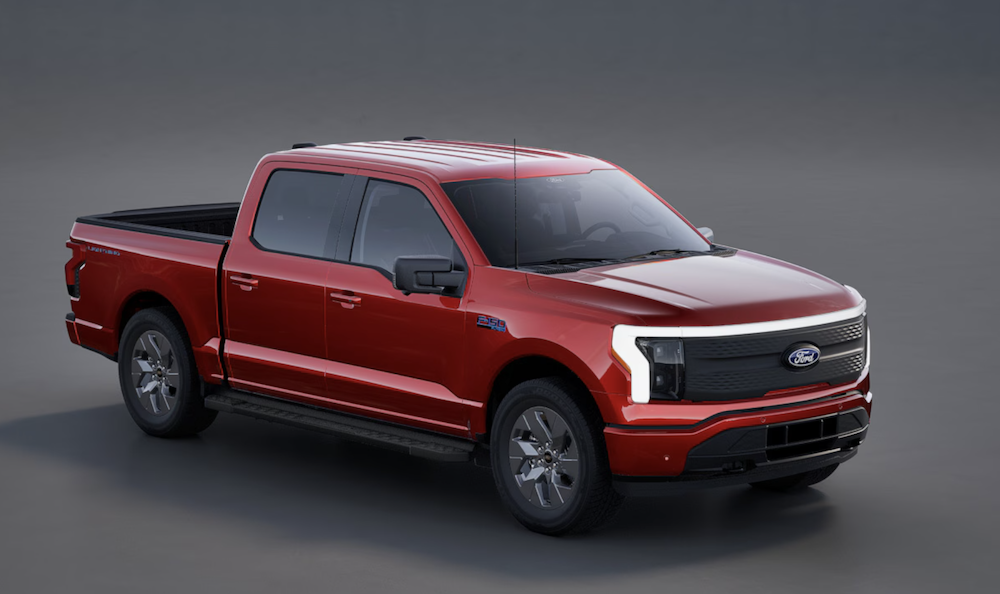
F-150 Lightning
Ford’s EV retreat is so dramatic it is remarkable Farley kept his job. The company announced a $19.5 billion restructuring charge tied largely to its EV miscalculation. Nineteen and a half billion dollars. Ford also decided to end the current all-electric F-150 Lightning and replace it with an extended-range version. It cancelled plans to build electric pickups in Tennessee and scaled back EV battery investments in Kentucky, projects supported by roughly $9.6 billion in combined federal and state incentives and sweetheart financing.
Those battery plants will now be repurposed for stationary battery energy storage.
Despite this retreat, Ford admirably continues to fund its California-based EV and advanced vehicle operations led by Doug Field, a respected former Tesla and Apple executive who joined Ford more than four years ago. In Silicon Valley terms, that qualifies as staying power.

Dr. Franziska Bell (Linkedin photo)
At GM, Barra previously touted four Silicon Valley executives whose tenures lasted two years or less. An accomplished executive sticking around more than four years there could reasonably be called a lifer. Ford’s chief data, AI, and analytics officer, Dr. Franziska Bell, marked her one-year anniversary with the company this month.
Happy work anniversary, Franziska.
By contrast, Barak Turovsky, whom Barra hired with great fanfare as GM’s first chief AI officer, lasted eight months. Bryan Goodman, a 26-year Ford veteran who oversees Ford’s AI strategy, is based in Dearborn. Unlike Barra, Ford does not appear to believe that all technology talent lives exclusively in Silicon Valley.
Ford deserves criticism for its pie-in-the-sky optimism about electric pickups. But it also deserves credit for protecting its crown jewel: the F-150 franchise, America’s best-selling pickup for more than four decades.
The Lightning is far and away the best-selling electric pickup in the U.S. In the first nine months of the year, Ford sold 23,034 Lightnings. GM sold 9,379 Chevy Silverado EVs, 6,147 GMC Sierra EVs, and 13,233 electric Hummers over the same period.
If Ford, the clear EV pickup leader, concluded the market is not there, why does GM believe it can succeed with lagging products? The media delights in declaring the Tesla Cybertruck a failure because it missed Elon Musk’s exaggerated forecasts, yet Cox Automotive estimates Tesla sold about 16,000 Cybertrucks in the same period, more than GM’s EV Hummer. Musk’s politics may be unpopular, but math still matters.
Factory Zero
GM builds the Silverado EV, Sierra EV, and Hummer EV at Factory Zero in Detroit, where Barra has already eliminated 1,140 jobs and cut production to one shift. Workers quoted by the World Socialist Web Site say they fear the plant’s future is in jeopardy. Detroit’s auto media will not touch that story until GM’s PR department issues a press release.
Those same stenographers have ignored another troubling trend. Despite Barra’s aggressive EV push, GM began losing EV market share in the third quarter. Overall EV sales rose about 60 percent, yet sales of GM’s Mexican-built Chevy Blazer EV increased just 1.1 percent to 8,089 vehicles. Cadillac Lyriq sales also rose only 1.1 percent to 7,309 units, despite earlier claims of overwhelming demand.
Meanwhile, Honda’s Prologue, built by GM in the same Mexican plant and mechanically similar to the Blazer EV, surged 60 percent to 20,236 sales.
Yet GM has recorded only about $1.6 billion in EV-related write-offs so far.
Former Ford CEO Mark Fields, who was pushed out in part for being seen as too cautious on EVs, recently predicted on CNBC that GM would be making more announcements in the new year. No Harvard MBA is required to guess what kind.
Michigan Gov. Gretchen Whitmer relieved GM of a prior commitment to keep 4,000 salaried employees at its headquarters in Detroit, a condition tied to $3.5 billion in state subsidies. GM will not come close to that number at its so-called Detroit headquarters, which currently consists of four floors in Dan Gilbert’s heavily subsidized Hudson’s Tower.
Here is a question I double-dare Detroit’s auto stenographers to ask Barra at the upcoming Detroit auto show: How many of GM’s top executives will actually work full time at Hudson’s Tower and pay Detroit’s nonresident tax?
If Barra dodges the question, that will speak volumes.
Starkman can be reached at eric@starkmanapproved.com Anonymity assured and protected.