

 by
by

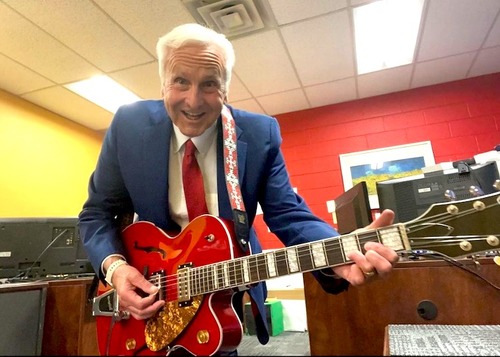
Mickey Lolich in 2009 (Photo: Tom Hagerty for LakelandLocal)
Mickey Lolich, the down-to-earth pitcher who played 13 seasons for the Detroit Tigers and was named Most Valuable Player of the 1968 World Series after winning three games and hitting his only major league homer in Game 2, died Wednesday at 85.
The Portland, Ore., native played for the Tigers from 1963 to 1975 before moving on to the New York Mets and later the San Diego Padres, where he retired in 1979.
Lolich finished his career with a 217–191 record, a 3.44 ERA, and 2,832 strikeouts.
After retirement, he became widely known as the donut man.
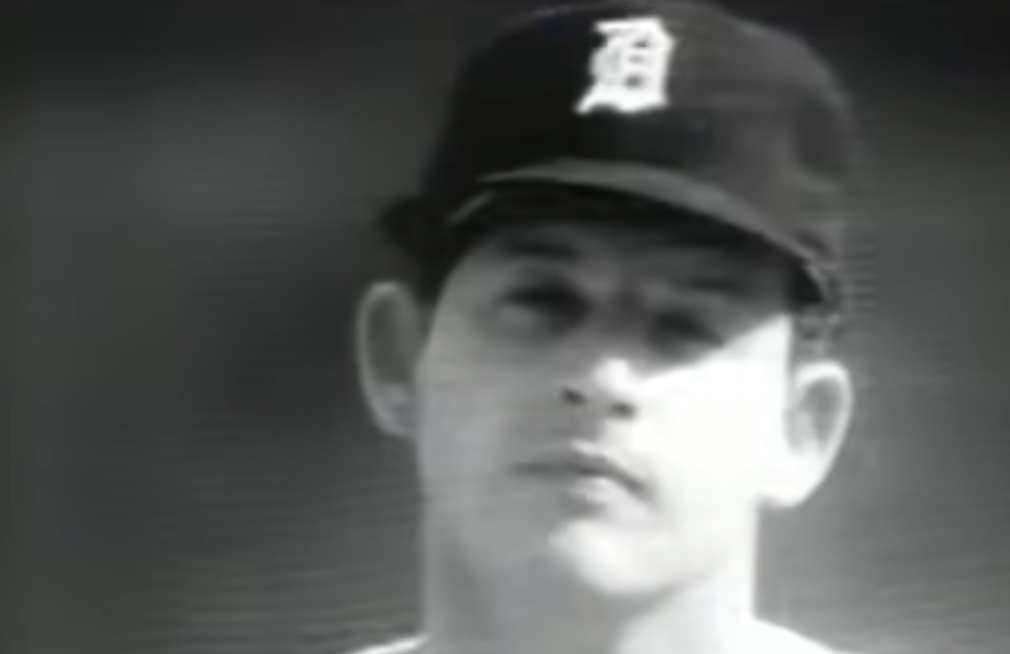
Lolich in the 1968 World Series
In 1979, Lolich invested in a donut shop in Rochester but later had a falling out with his partner and bought him out. In 1983, after losing the lease, he moved the shop to Lake Orion and eventually sold it in the late 1990s.
Veteran Detroit baseball writer Lynn Henning wrote in a 2024 Deadline Detroit column that there is a strong argument for putting Lolich’s name on the wall at Comerica Park.
- Only three left-hand pitchers in Major League Baseball history – Randy Johnson, Steve Carlton, and C.C. Sabathia – struck out more batters than Lolich, whose 2,832 are 23rd on MLB’s all-time list.
- Twice with the Tigers he finished among top-three voting for the American League Cy Young Award, the ultimate trophy for each league’s best pitcher in a season. Lolich was runner-up in 1971 to then-Oakland phenom Vida Blue. A year later, he lost to Gaylord Perry, and Wilbur Wood.
- His almost singular knack for working overtime also made Lolich, then and now, a marvel of pitching endurance. During his prime years, from 1964-76, Lolich averaged 263 innings per season – about 100 innings more than today’s starters often total. He threw an astonishing 371 innings in 1971 and three other seasons worked more than 300.
- Lolich, of course, owns in Detroit eternal celebrity for another reason: He won three games in the 1968 World Series, including pitching – on only two days of rest – a complete, nine-inning, vanquishing of the St. Louis Cardinals in Game . That game delivered to Detroit a championship parade, which, even with perspective 56 years later, is perhaps unmatched for the bliss and relief it brought a town a year after Detroit had been ravaged by the then-worst urban rebellion in American history.
In 1982, he was inducted into the Michigan Sports Hall of Fame. In October 2022, he was inducted in the Croatian-American Sports Hall of Fame.
Henning discussed why he falls short of being inducted into the Baseball Hall of Fame:
But with the general criterion that one needs a Hall of Fame plaque to be part of the brick mix, a person who since 1989 has voted for Baseball Hall of Fame inductees will explain why Lolich just misses on Cooperstown.
Lolich, in this and the view of most Hall voters through the years, finishes a tad beneath the ultra-picky statistical heights necessary for enshrinement. And it is precisely because entry is so difficult that the Baseball Hall of Fame has remained through generations the most respected of all such Halls.
If you go by one basic statistical arbiter that can best define how Lolich falls short, it’s career WAR: Wins Above Replacement.